

The MAHE Application Monitoring Framework
At MAHE, we believe that measuring something is essential for effective management. To ensure that women’s access to education is not just aspirational but concrete, we have instituted a robust, institution-wide system to monitor women’s application and acceptance rates across all programs—and to act meaningfully on insights.
Why It Matters: Beyond Access to Accountability
Even when admission policies appear gender-neutral, structural and systemic barriers can skew outcomes. Without careful tracking, disparities may go unnoticed: female applicants may be disadvantaged in certain schools, or gaps may emerge in select departments. To close those gaps, we need data—transparent, timely, and actionable—to inform strategy.
How We Track: The MAHE Application Monitoring Framework
1.Integrated Data Capture via SLCM
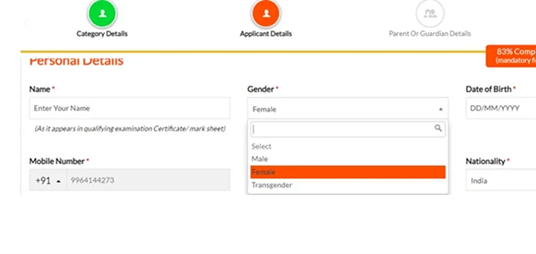
- The Student Life Cycle Management (SLCM) software is the institutional backbone for admissions. Every application, demographic detail (including gender), program choice, and status (accepted, rejected, waitlisted) is captured in real time.
- With this system, the Admissions Office can immediately disaggregate numbers by gender, program, department, and campus.
2. Systematic Monitoring & Review Cycles
- At designated intervals during each admission cycle—and immediately after close of applications—the data is exported to dashboards for review by the Admissions Committee, Deans, and Top Management.
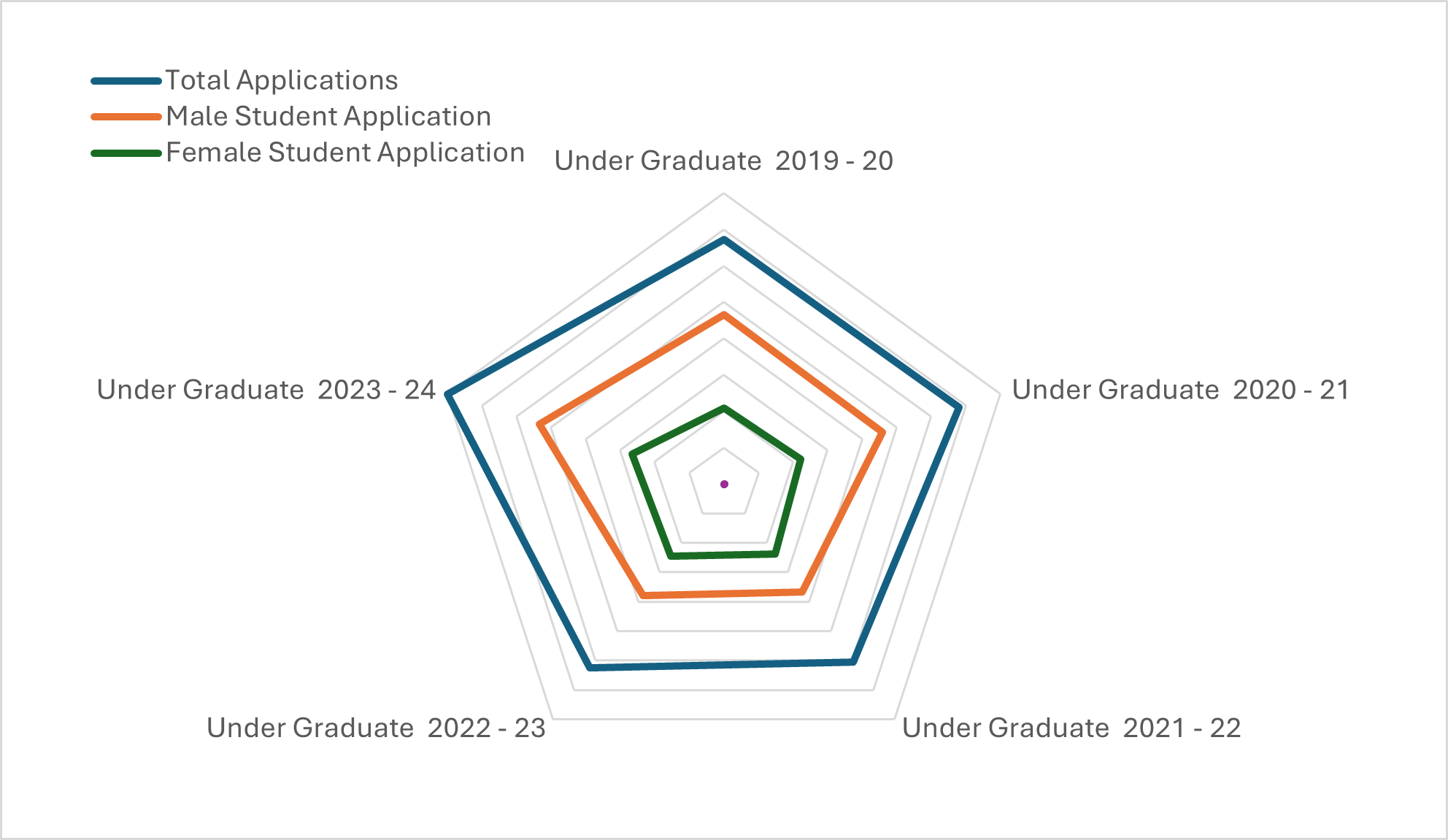
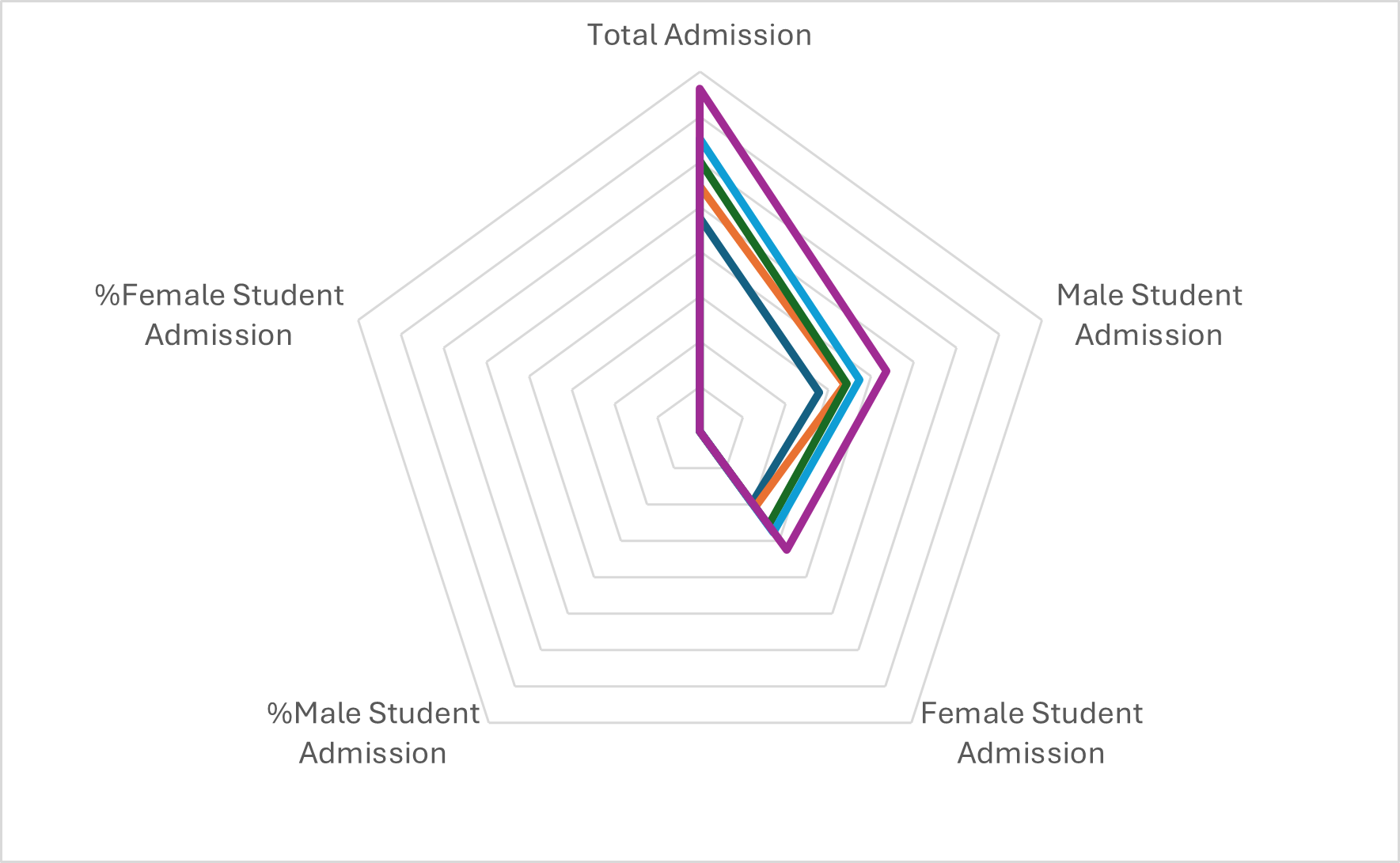
- The system enables comparative year-on-year tracking: e.g. “Women’s application growth in Engineering, 2022 → 2024”.
- Departments receiving alerts (where female application or acceptance lags behind benchmarks) prepare short remedial action plans.
3. Closing the Loop: Action, Feedback & Strategy
- Before each academic year, results of the prior cycles are synthesized (gaps, trends, pipelines) and shared with leadership and relevant institution heads.
- Based on observed gender disparity, specific outreach or support interventions are designed (e.g. targeted school outreach for women in underrepresented subjects).
- Feedback is also collected from applicants, students, faculty, and external stakeholders to refine the measurement system.
MAHE’s tracking of women’s application and acceptance rates is not a perfunctory metric—it is a dynamic engine shaping decisions, driving equity, and ensuring that our commitment to gender equality is grounded in evidence, not just rhetoric.
MAHE offers a comprehensive spectrum of student support systems designed to foster true equality and active engagement across all genders—while placing special emphasis on advancing gender equity.
Under the guidance of the Office of Student Affairs, several student groups serve as advocacy and support networks—championing gender equity, providing safe forums, and raising community awareness. One such flagship initiative is the Gender Champion Workshop, which empowers women by offering a platform to engage in social, political, and cultural discourse. Participants explore challenges, develop leadership skills, and promote women’s status within the campus and beyond.
In parallel, the student collective organizes targeted events to support women who have faced violence—whether sexual, emotional, psychological, or physical. Through these programs, MAHE ensures that survivors or those affected by such adversity are not only heard, but supported, with peer, group, and institutional resources.
At MAHE, promoting gender equality is more than an abstract ideal—it is woven into campus life through academic, social, and infrastructural support. The Manipal Centre for Women Studies regularly hosts seminars, colloquia, and conferences on gender issues, bringing scholars, activists, and students into dialogue on topics such as violence, health, labor, representation, and social justice.
To translate discourse into lived experience, we offer a robust portfolio of support services to all students—especially those who face systemic gender-based barriers. These services aim to ensure equitable opportunity, full participation, and dignity for all genders.
One of our flagship student-led efforts is the Queer Club “IRIS”. Under institutional support, IRIS works tirelessly to foster inclusion and awareness. On campus, the club organizes interactive events and safe spaces; online, IRIS maintains a steady stream of educational content about LGBTQ+ identities, rights, and issues. (KMC's “Student Clubs” page confirms IRIS's active role in campus life.) KMC STUDENT COUNCIL - In 2025, IRIS, in collaboration with the KMC Student Council, led its first Pride Parade across multiple campus landmarks, amplifying visibility, solidarity, and community support. KMC STUDENT COUNCIL -
Beyond clubs, MAHE ensures that every campus offers essential physical infrastructure to support inclusivity:
- Women’s rooms and washrooms are provided in all buildings, often equipped with sanitary pad vending machines to address menstrual equity.
- Breastfeeding rooms / dedicated mother-friendly spaces are available to support nursing mothers.
- All restrooms are designed to promote safety, privacy, and dignity for all genders.
Together, these academic, social, and infrastructural elements create an ecosystem where gender equity is lived, felt, and sustained.